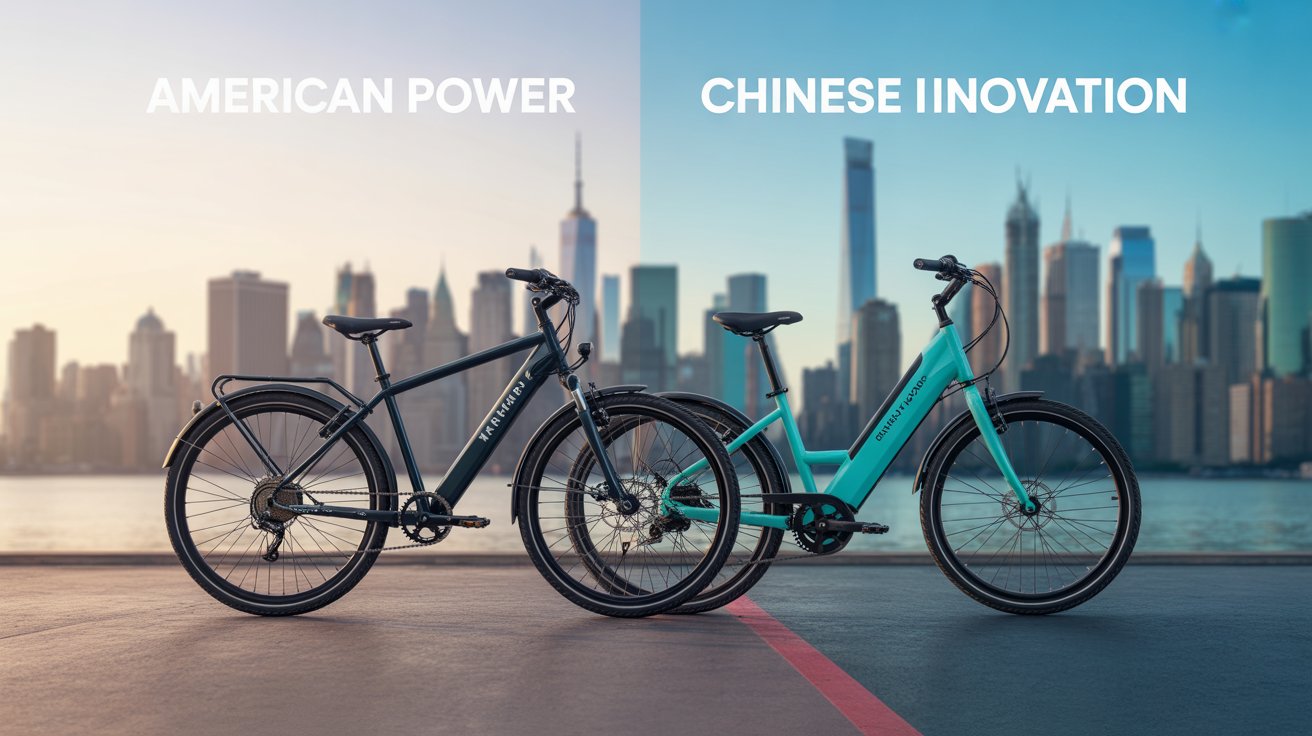
Ever noticed how every e-bike ad feels like a tug-of-war between American engineering and Chinese pricing? The global electric bike market is heating up, and the competition between U.S. vs Chinese E-Bike Brands is more intense than ever. Riders today don’t just ask which bike is faster—they ask which brand gives better value, reliability, and long-term support.
Let’s break down what’s really happening behind the glossy ads and “too good to be true” deals.
The Real Showdown: U.S. vs Chinese E-Bike Brands
When it comes to U.S. vs Chinese E-Bike Brands, the difference is less about looks and more about how they approach quality, pricing, and innovation. American companies like Rad Power Bikes, Super73, and Aventon focus heavily on design, safety certifications, and customer experience. Meanwhile, Chinese manufacturers like Himiway, Engwe, and Heybike dominate in affordability, rapid production, and variety.
Both sides have strengths—but their business models couldn’t be more different.
Price vs Performance: The Core Divide
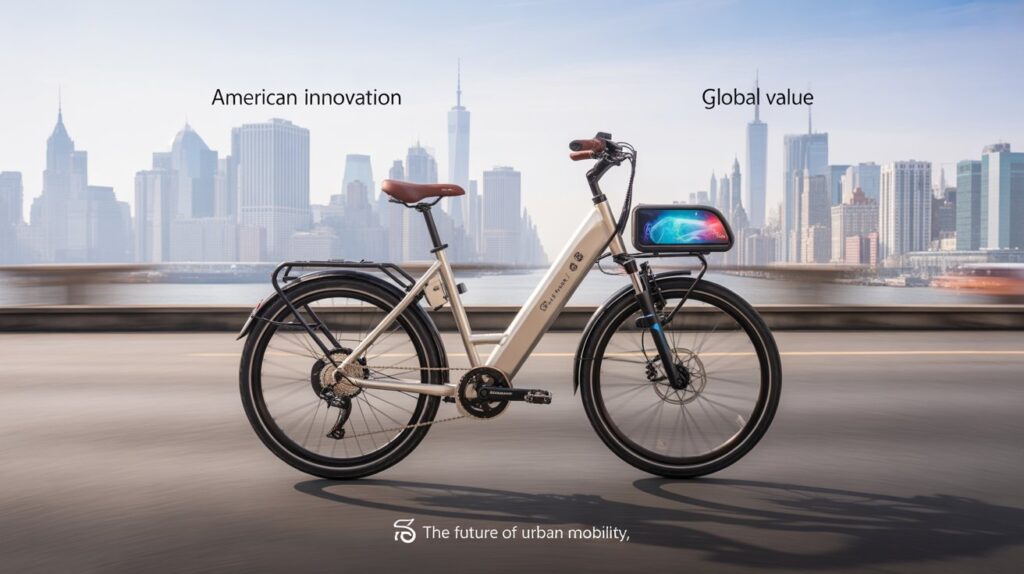
If you’ve ever compared specs online, you’ll notice Chinese brands almost always undercut U.S. brands by hundreds of dollars. That’s not luck—it’s strategy.
Chinese brands keep costs down through mass production, lower labor costs, and simplified logistics. Many of them use standardized parts and outsource fewer components. The result? A sleek e-bike that looks premium but costs half as much.
On the other hand, U.S. brands put more money into component quality and post-purchase service. They test bikes for North American regulations (like UL 2849 certification) and build them for local terrain—steeper hills, heavier riders, and longer commutes.
So yes, the American bike costs more, but you’re also paying for safety, performance consistency, and stronger customer support.
Battery and Motor Technology
In the competition between U.S. vs Chinese E-Bike Brands, battery quality is one of the biggest dividing lines.
- U.S. brands typically use name-brand battery cells (Samsung, LG, Panasonic) with robust Battery Management Systems (BMS) to ensure safety and longevity.
- Chinese brands, while improving, often use mixed-cell batteries or generic BMS designs to cut costs.
As for motors, both sides frequently use hub motors from Chinese OEM suppliers. The difference lies in calibration—U.S. companies tune their controllers for smoother acceleration, better torque handling, and compliance with U.S. speed limits (usually capped at 20–28 mph).
Chinese bikes, in contrast, sometimes push the limits, offering higher speeds out of the box but with less efficient energy control.
Build Quality and Safety Standards
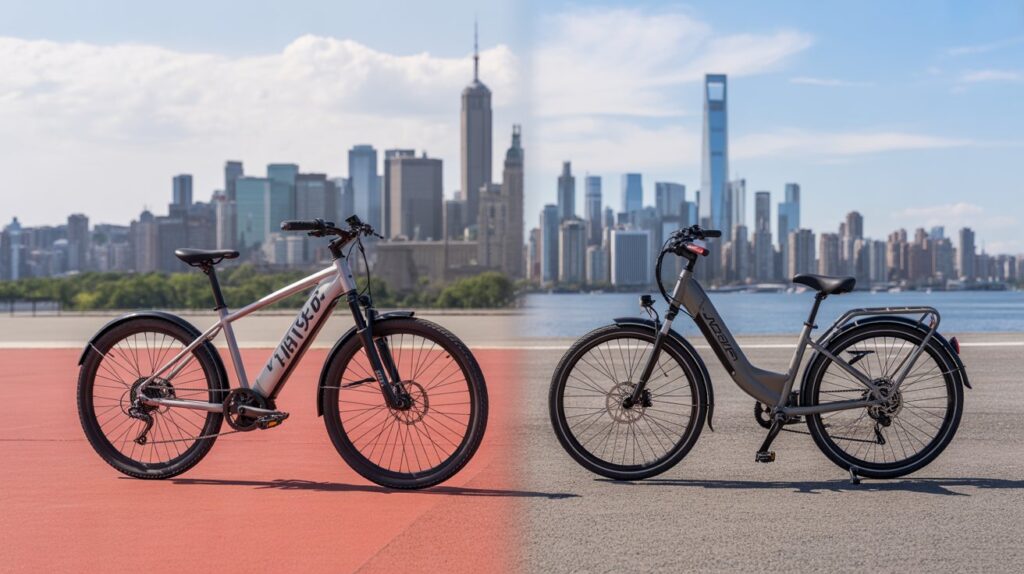
When riders compare U.S. vs Chinese E-Bike Brands, frame quality and safety certification often decide the winner.
- U.S. models usually undergo strict safety testing (UL, ASTM, or CPSC compliance) and use reinforced aluminum or hydroformed frames.
- Chinese models may skip or simplify certification, which keeps prices low but introduces risk in long-term durability or fire safety.
This doesn’t mean all Chinese bikes are unsafe—many reputable brands now meet global standards—but the inconsistency across manufacturers is what makes American buyers cautious.
Customer Service and After-Sales Support
One area where U.S. brands clearly lead is customer experience.
American companies offer warranty coverage, local repair partnerships, and responsive customer support.
Chinese brands often struggle in this area. Many ship directly from warehouses without dedicated service centers, meaning replacements or repairs can take weeks. For riders new to e-bikes, that lack of quick help can be a dealbreaker.
That’s why for many, the debate of U.S. vs Chinese E-Bike Brands isn’t just about price—it’s about peace of mind.
Logistics and Availability
Another interesting edge for Chinese companies is logistics. With large-scale production hubs and multiple global warehouses, Chinese brands deliver faster and cheaper worldwide.
Some even have U.S.-based fulfillment centers, reducing shipping time dramatically.
U.S. manufacturers, however, often assemble or finish bikes domestically. This ensures better quality control but adds cost and lead time. So, if you’re ordering a U.S. bike, expect higher shipping fees and longer waits—but fewer surprises in the box.
Long-Term Value: What’s Really Worth Paying For
Here’s where the real debate of U.S. vs Chinese E-Bike Brands comes into focus.
Chinese brands win in affordability and accessibility—they get more people riding e-bikes faster. But U.S. brands dominate in long-term satisfaction. Over time, better build quality, reliable batteries, and accessible service save money and stress.
In short: Chinese bikes win on entry cost, U.S. bikes win on ownership cost.
Real-World Examples
- A Himiway Cruiser might cost around $1,300, offering a big battery and fat tires. It’s fun, but heavier and less refined.
- A Rad Power RadRover costs about $1,700—slightly pricier, but with smoother torque control, safer electronics, and better customer support.
The gap isn’t just $400—it’s the difference between short-term excitement and long-term reliability.
Innovation and Design Approach
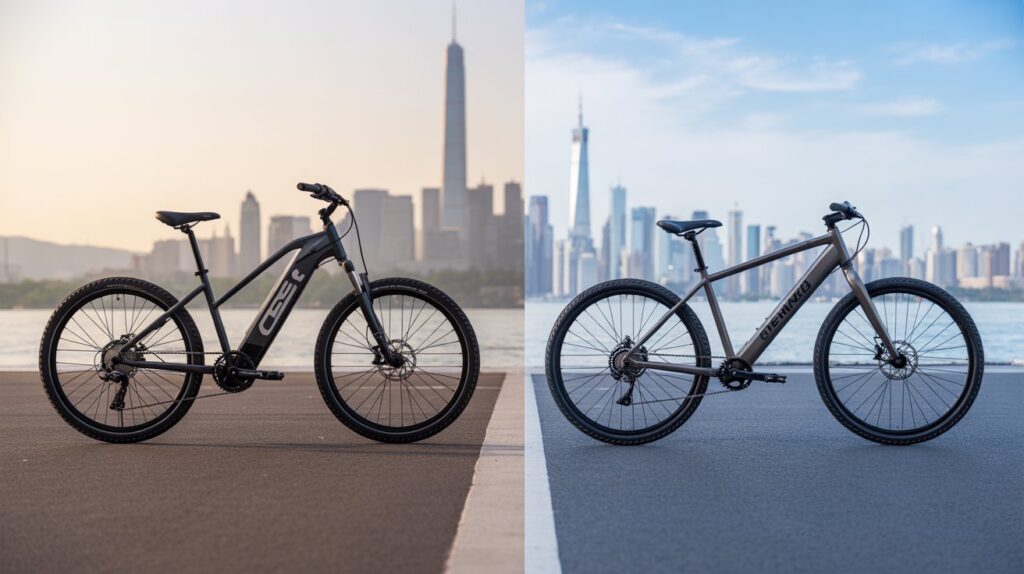
Chinese manufacturers are fast movers—they release new models almost every quarter, experimenting with frame styles and motor combinations.
U.S. brands, meanwhile, take a slower but more calculated approach, focusing on improving comfort, integration, and design ergonomics.
This means Chinese bikes often have flashy specs but inconsistent tuning, while American bikes offer balanced, commuter-friendly performance designed for real-world riding.
Expert Insight: What Smart Buyers Do
Smart riders now blend the best of both worlds. Many buy Chinese e-bikes but upgrade parts locally—replacing the brakes, controller, or tires with U.S. components. Others go straight for a U.S. brand if they want reliability and support from day one.
So, when comparing U.S. vs Chinese E-Bike Brands, the question isn’t “which is better” — it’s “which fits your lifestyle.”
When to Buy Chinese
- You’re on a tight budget.
- You’re handy with bike maintenance.
- You ride short distances or casually.
- When to Choose U.S. Brands
- You need warranty and support.
- You ride daily or long distances.
- You prioritize safety and durability.
Final Verdict: Balance Over Bias
In the battle of U.S. vs Chinese E-Bike Brands, there’s no absolute winner—just different priorities.
If you want affordability, variety, and instant delivery, Chinese brands shine. But if you value long-term safety, warranty, and refined performance, U.S. e-bike makers deliver the better experience.
At the end of the day, your best e-bike isn’t defined by its country of origin—it’s defined by how well it fits your needs.
FAQs: U.S. vs Chinese E-Bike Brands
1. Are Chinese e-bikes reliable for long-term use?
Some are, but consistency varies. Reputable Chinese brands like Himiway and Engwe offer decent reliability for casual riders. However, cheaper or unbranded models may face issues with battery life, wiring, or spare part availability after a year or two.
2. Why are Chinese e-bikes so much cheaper than U.S. ones?
Chinese manufacturers cut costs through mass production, lower labor expenses, and standardized components. U.S. brands spend more on testing, safety certifications, customer support, and durable materials — which increases the price but improves reliability.
3. Do U.S. e-bike brands use Chinese parts?
Yes, many do. Even top American e-bike brands often source motors, batteries, or frames from Chinese suppliers. The main difference is that U.S. companies perform stricter quality control and safety testing before final assembly.
4. Which is better for beginners: U.S. or Chinese e-bikes?
For beginners on a tight budget, Chinese e-bikes can be a great starting point. If you prefer worry-free ownership and easy customer service, a U.S. e-bike is the safer choice.
5. Are Chinese e-bikes safe to ride in the U.S.?
Yes, but make sure the model you buy follows U.S. regulations (like Class 1, 2, or 3 limits) and has UL certification. Some cheaper imports skip these steps, which can pose fire or performance risks.
6. Do U.S. e-bikes perform better on hills and long rides?
Generally, yes. U.S. e-bikes are tuned for higher torque and smoother power delivery, making them more capable on steep or extended rides compared to most budget Chinese models.
7. Is the resale value different between U.S. and Chinese e-bikes?
Absolutely. U.S. brands like Rad Power and Super73 tend to hold value better because they’re recognized, easier to service, and have a stronger aftermarket demand.
8. What’s the smartest way to choose between them?
If budget is your main concern, go with a well-reviewed Chinese model. But if you see an e-bike as a long-term investment for daily commuting, a U.S. brand will likely save you money and frustration in the long run.
Source: https://ridethebikes.xyz/
Your trusted guide to electric mobility and two-wheeler insights.