If you’re ready to turn your regular bicycle into a high-powered, road-ripping machine, a 72V electric bike conversion kit with battery might be the smartest move you’ll make this year. These kits aren’t for the casual Sunday rider. they’re for commuters who want to fly past traffic, off-roaders looking to tear through trails, or serious DIY builders who want full control of their ride’s power and personality.
In 2025, conversion kits are no longer the sketchy side-hustle solutions they used to be. With more reliable components, smarter controllers, and safer battery options, the 72V e-bike scene has become a hotbed for innovation. If you’re ready to ride bold, ride fast, and ride smart, this guide is your starting point.
What is a 72V Electric Bike Conversion Kit?
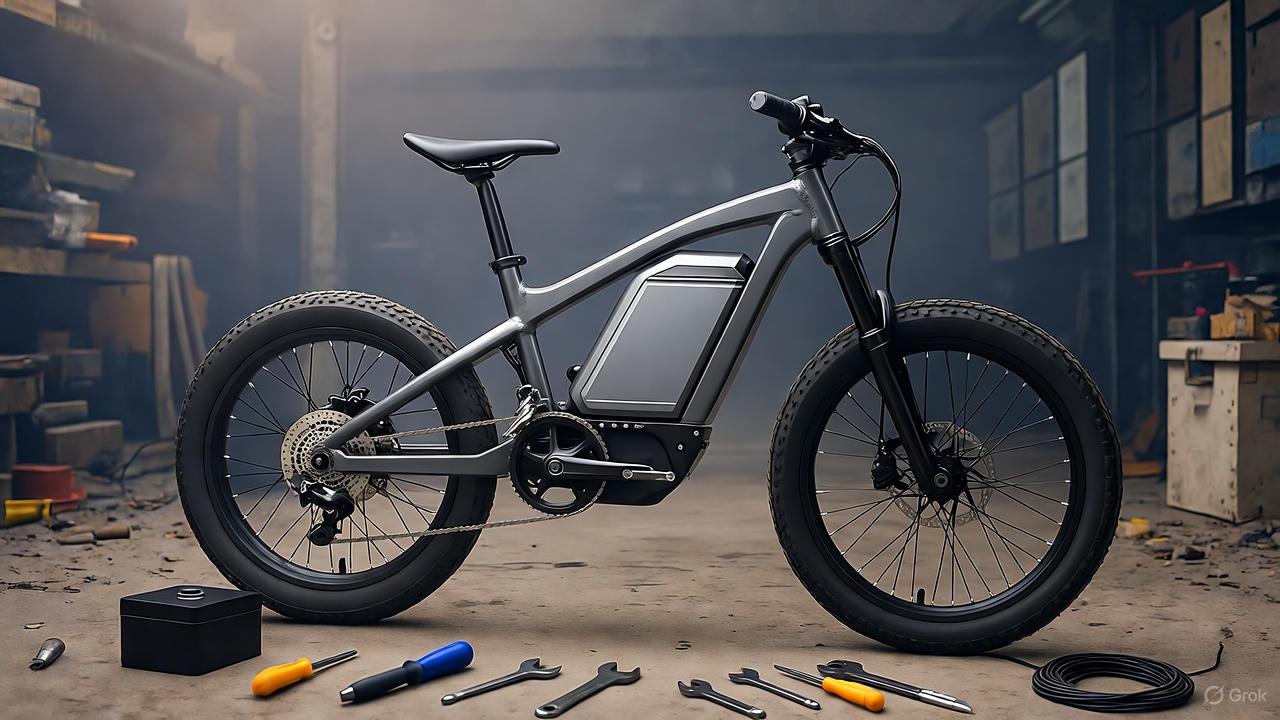
A 72V electric bike conversion kit is a bundle of components that lets you transform a standard bicycle into a high-powered e-bike. The “72V” refers to the voltage of the battery, which gives your motor the juice it needs to deliver serious torque and speed.
These kits typically include:
- A hub motor or mid-drive motor (rear wheel or crank area)
- A programmable controller
- A display unit (TFT or LCD)
- Throttle and brake sensors
- Wiring harnesses and connectors
- Optional pedal assist sensor
- A compatible 72V lithium battery with BMS
The result is a machine that can reach speeds of 40–60 mph depending on configuration—more than enough to make your commute feel like a race.
Why Riders Choose 72V Kits in 2025
Many e-bike riders start with 36V or 48V setups. But as your experience grows, you start to crave more power, smoother acceleration, and the ability to conquer steep hills without effort. That’s where a 72V system steps in.
Here’s why more riders in 2025 are upgrading to 72V:
1. Serious Torque for Steep Hills
Whether you live in a hilly city or ride trails, 72V systems can power through inclines like they’re flat ground.
2. Higher Top Speeds
Depending on your motor and wheel size, top speeds of 50 mph are totally achievable with 72V kits.
3. Faster Acceleration
From a dead stop to cruising speed in just a few seconds—great for city traffic or fun launches.
4. More Efficient Performance at High Load
72V setups run cooler and more efficiently under heavy loads compared to lower voltage systems.
5. Future-Proof Setup
As controllers and battery tech advance, 72V is becoming the new sweet spot for high-performance DIY builds.
What You Get in the Kit
Let’s break down each component of a typical 72V electric bike conversion kit in 2025.
Hub or Mid-Drive Motor
Most 72V kits come with rear hub motors, though some offer mid-drive versions for trail or off-road builds. Power ranges from 2000W to 5000W and even beyond. Common options include brushless, gearless motors for minimal maintenance and silent operation.
Programmable Controller
Modern controllers let you adjust acceleration curves, regen braking, phase current, and low voltage cutoff. Sine-wave controllers are preferred for their smoother power delivery and quieter rides.
Display Screen
You’ll usually get a TFT or large LCD screen that shows speed, power, voltage, distance, and sometimes controller diagnostics.
Throttle and Brake Cutoffs
Twist or thumb throttles come standard. Most kits also include e-brake levers that cut motor power when braking for safety.
PAS (Pedal Assist Sensor)
Some kits include a cadence-based PAS sensor. This is optional in many high-power kits since many riders use throttle-only mode at 72V.
Battery with BMS
Not all kits include the battery, but when they do, it’s usually a 72V lithium-ion pack with 20–30Ah capacity. A quality battery must include a smart BMS that can handle the controller’s amperage draw without overheating or cutting out.
Choosing the Right Battery: Don’t Cheap Out
One of the biggest mistakes new builders make is pairing a powerful controller with a weak battery. A 72V motor drawing 60–80 amps continuously needs a battery and BMS that can handle it.
Here’s what you need to look for:
- Continuous Discharge Rating: Your battery should match or exceed your controller’s max continuous current.
- Smart BMS: Protects against overcharge, over-discharge, short circuits, and thermal issues.
- High Quality Cells: Samsung, LG, or Panasonic cells are considered reliable for high-load use.
- Proper Mounting Options: Whether it’s triangle, frame bag, or rear rack, your frame needs to fit the battery safely.
Budget around $900–$1,200 for a serious 72V battery that won’t leave you stranded.
Installation
Converting to a 72V system isn’t just plug-and-play. You’re working with high currents, tight fitments, and potentially risky wiring if you don’t know what you’re doing.
Here’s what to plan for:
Motor Mounting and Frame Fit
Check your rear dropout spacing if you’re installing a hub motor. Fat tire frames often need wider motors. Reinforce your frame with torque arms to handle high torque.
Battery Placement
Measure your frame triangle or rear rack space. 72V batteries are big and heavy make sure your frame can support it without unbalancing the ride.
Connector Matching
Use proper gauge wires and waterproof connectors. Poor quality connectors can melt or short under load.
Controller Programming
Set limits properly in your controller to avoid frying your system. If unsure, start with conservative settings and tweak over time.
Brake Compatibility
High-speed builds need hydraulic or mechanical disc brakes that can safely stop the added momentum.
Safety First
Install an inline fuse between battery and controller. Keep wiring neat and protected from vibration or weather. Heat shrink and secure everything.
Real-World Rider Feedback
In forums and builder communities, 72V conversions are the new benchmark for serious riders. Here’s what some riders are saying in 2025:
- “My 72V 3000W rear hub build hits 50 mph and absolutely crushes hills I used to walk up.”
- “I switched from a 48V commuter setup and I’ll never go back. The acceleration is so addictive.”
- “The hardest part was fitting the massive battery. Once that was figured out, it was plug and play.”
- “Cheap batteries are a trap. I wasted $400 on one that couldn’t handle 60 amps. Go premium or go home.”
This isn’t a beginner’s project—but for those willing to learn, the payoff is massive.
Legal and Safety Considerations
Before you go full-throttle, remember that most U.S. states legally classify e-bikes with a 750W motor and 28 mph cap as Class 3 bikes. A 72V 3000W+ kit easily exceeds that.
If you’re riding on public roads:
- Know your local e-bike laws.
- Consider registration or using your bike off-road only.
- Always wear proper protection: full-face helmet, gloves, and bright clothing.
- Install a loud horn and bright front/rear lights.
Is a 72V Conversion Right for You?
Choose a 72V e-bike kit if:
- You want to go faster and climb steeper hills.
- You already have experience with basic e-bike wiring and systems.
- Your frame is strong and spacious enough for the battery.
- You’re ready to invest in a high-quality battery and controller.
- You’re okay with being a bit overpowered (and a lot more fun).
Avoid it if:
- You’re new to e-bikes.
- You only ride in bike lanes or areas with strict legal limits.
- You want a plug-and-play commuting solution without customization.
Build Smart
The 72V electric bike conversion kit is not just a performance upgrade—it’s a whole new way to ride. With power on tap, you’ll never struggle on a hill again or get stuck in slow traffic. But it comes with responsibility. High voltage demands respect. Take your time with the build, do your research, and invest in quality parts.
If done right, your 72V e-bike can be a daily-use, trail-blazing, head-turning machine that lasts years and delivers adrenaline on demand.
Ready to go from casual to hardcore? Then the 72V path is calling.
FAQ
Q1. Is a 72V e-bike conversion kit street legal in the U.S.?
No, most 72V setups exceed legal limits. Always check your state laws, especially regarding wattage and speed caps.
Q2. How fast can a 72V electric bike go?
Speeds range from 40 to 60 mph depending on motor wattage, controller settings, and wheel size.
Q3. Can I use a 48V battery with a 72V controller?
No, voltage mismatch can damage components. Always match your battery voltage to your controller’s input range.
Q4. What’s the best battery size for a 72V conversion?
A 72V 20Ah to 30Ah lithium-ion battery with high continuous discharge rating is recommended.
Q5. How much does a full 72V kit with battery cost?
Expect to spend between $900 and $2,000 for a quality setup with motor, controller, and battery included.