Why Knowing Your E-Bike Parts Matters
Electric bikes are no longer just a trend—they’re a real solution for daily travel, city commuting, and even highway adventures. But to get the best out of an e-bike, you need to understand how its key parts work. From the battery that powers your ride to the gears that make uphill climbing easier, every component plays a role in your comfort, performance, and long-term savings.
This guide will break down the most important e-bike parts—battery, motor, charger, gears, and other essentials—so you know exactly what to look for when buying, upgrading, or maintaining your electric bike in 2025.
Electric Bike Batteries Explained
The battery is the heart of every electric bike. It stores the energy that powers the motor and determines how far you can travel on a single charge. Most modern e-bikes use lithium-ion batteries because they are lightweight, long-lasting, and charge faster compared to older lead-acid types.
The size of a battery is usually measured in watt-hours (Wh). A 500Wh battery can deliver 500 watts of power for one hour, or 250 watts for two hours. For city rides, a 400–500Wh battery is often enough, while long-range riders may want 700Wh or higher.
A good battery should last between 3 to 5 years if you charge it properly. Avoid draining it completely or leaving it plugged in for too long. Keeping your battery between 20% and 80% charge helps extend its lifespan.
In 2025, new solid-state batteries are starting to appear, offering faster charging and more range, but they’re still expensive. For most riders, lithium-ion remains the best balance between cost and performance.
Charging Your E-Bike
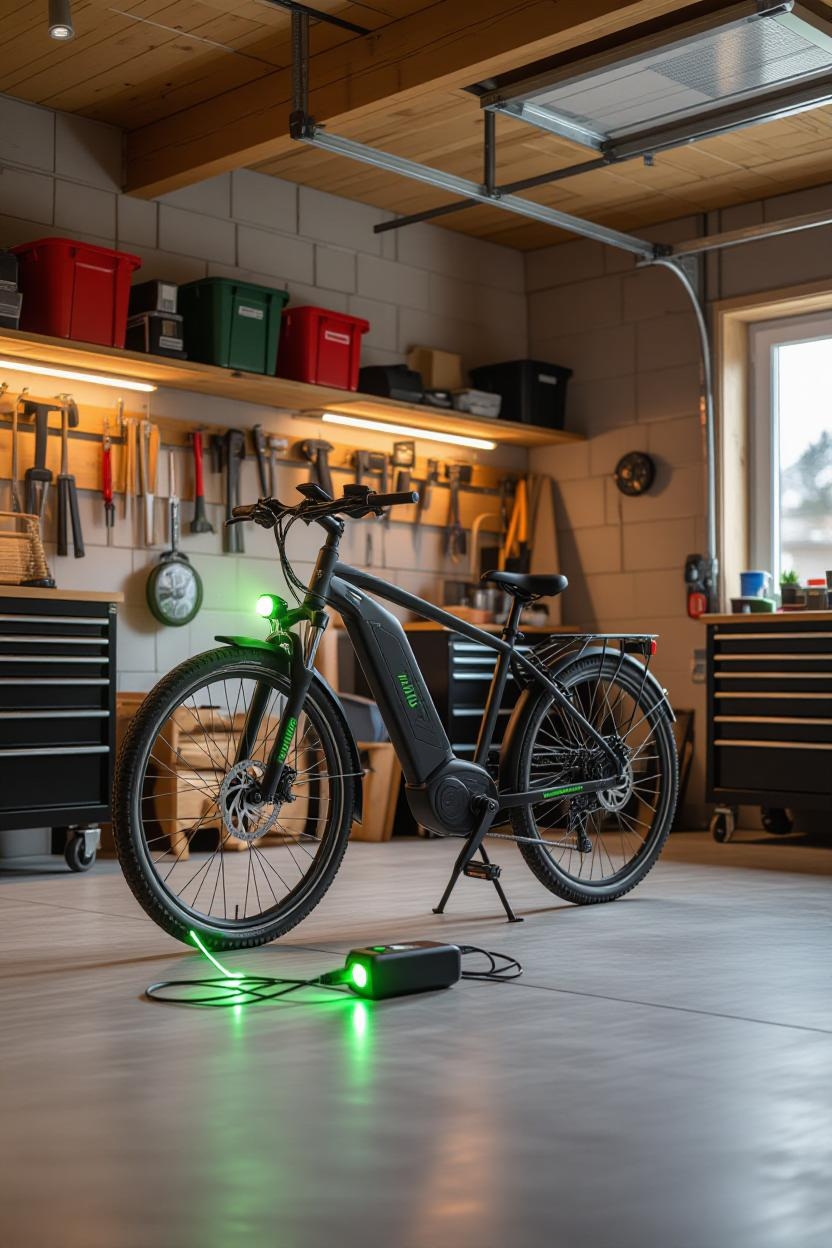
Charging is where convenience meets safety. Most e-bikes take 3 to 6 hours to charge fully, depending on the battery size and charger type. Standard chargers work fine for daily use, but many riders are now choosing fast chargers that can refill 80% of the battery in under 2 hours.
Always use the charger that comes with your e-bike or one recommended by the manufacturer. Using a mismatched charger can damage the battery or even cause overheating.
A simple tip for city riders: charge your battery overnight at home, and if your commute is longer, keep a spare charger at the office. Public charging stations are also increasing in many US cities, making it easier to stay powered on the go.
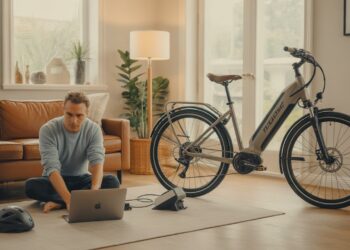
E-Bike Motors and Performance
If the battery is the heart, the motor is the muscle of your electric bike. Motors come in two main types: hub motors and mid-drive motors.
A hub motor sits inside the wheel hub (front or rear) and is great for casual city rides. It’s simple, affordable, and requires less maintenance.
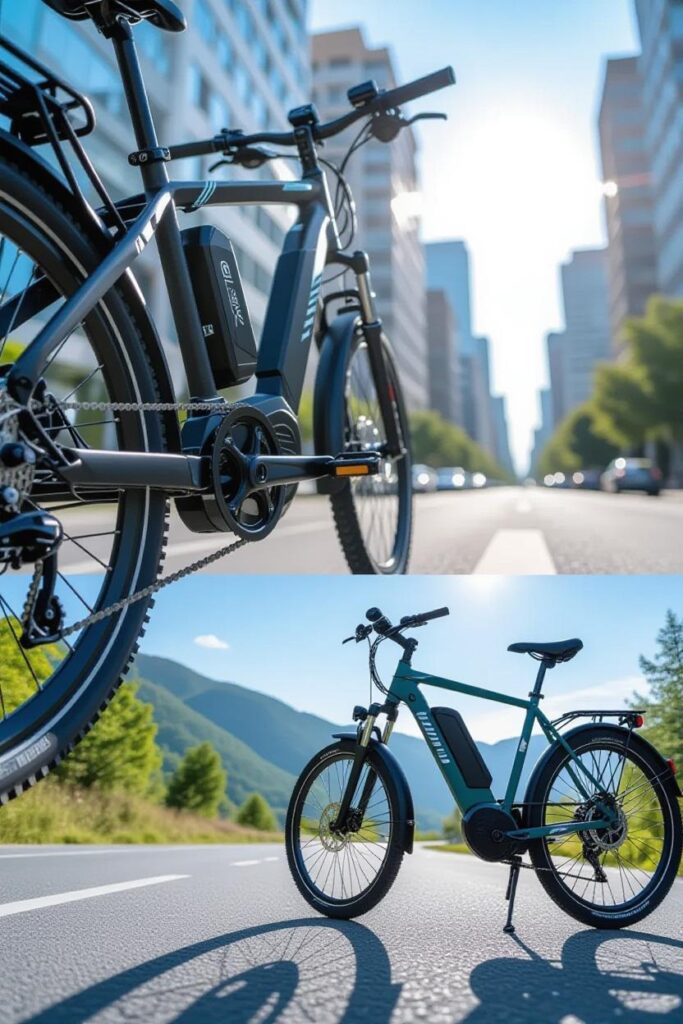
A mid-drive motor is placed near the pedals and directly drives the crank. This design offers better balance, more torque for hill climbing, and smoother power delivery. That’s why most premium e-bikes in 2025 use mid-drive motors.
Motor power is measured in watts. For short city rides, a 250W motor is more than enough. If you plan to ride on highways or steep hills, 500W or 750W motors give you stronger performance. Some adventure e-bikes even come with dual-motor systems for extra power.

Gears on Electric Bikes
Do electric bikes really need gears? The answer depends on how and where you ride. Single-speed e-bikes work fine for flat city streets, but gears make a big difference when you’re climbing hills, carrying extra weight, or riding long distances.
Modern e-bikes often use 7 to 9-speed gear systems. These gears work alongside pedal assist, letting you save battery power by pedaling more efficiently. For example, using a lower gear uphill reduces motor strain and increases your battery life.
In 2025, we’re also seeing more automatic gear-shifting systems, which adjust gears for you based on speed and terrain. That means no more fiddling with shifters—just a smooth, effortless ride.
Essential E-Bike Parts You Should Know
Beyond the motor, battery, and gears, there are several other parts that make an e-bike complete.
Controller – Acts as the brain, managing how much power goes from the battery to the motor.
Throttle – Found on many e-bikes, it allows you to ride without pedaling, just like a scooter.
Pedal Assist Sensor – Detects how hard you’re pedaling and adjusts motor support automatically.
Brakes – Disc brakes are common now, offering strong stopping power even in wet weather.
Display/Screen – Shows battery level, speed, distance, and assist mode.
Lights & Reflectors – Essential for safety during night rides.
Each of these parts may look small, but together they create the comfort and safety that define the electric bike experience.
Comparison Table: Batteries, Motors, and Gears
Battery Comparison
| Battery Type | Range | Lifespan | Best For |
|---|---|---|---|
| Lithium-Ion | 25–70 miles | 3–5 years | Most riders |
| Lead-Acid | 10–20 miles | 1–2 years | Budget options |
| Solid-State | 80+ miles | 5–7 years | High-end, future-ready |
Motor Comparison
| Motor Power | Terrain | Rider Need |
|---|---|---|
| 250W | Flat city roads | Daily commute |
| 500W | Mixed roads | City + light hills |
| 750W+ | Highways & steep hills | Adventure + long rides |
Gear System Comparison
| Gear System | Advantage | Best Use |
|---|---|---|
| Single-Speed | Simple, low cost | Flat city roads |
| 7–9 Speed | Efficient pedaling | Mixed terrain |
| Automatic | No gear shifting | Smart commuting |
Buyer’s Tips Before Choosing Parts
When buying or upgrading an e-bike, think about your lifestyle. If you mostly ride within the city, prioritize a lightweight battery and a 250W motor with 7-speed gears. If you plan weekend trips or highway commutes, go for a 500Wh+ battery with a mid-drive motor and multiple gears.
Always make sure your charger is compatible with your battery. If you want to future-proof your purchase, look for models with removable batteries so you can easily replace or upgrade them later.
Frequently Asked Questions
Q: How long does an e-bike battery last?
Most lithium-ion batteries last 3 to 5 years, depending on how often and how carefully you charge them.
Q: Can I use any charger for my e-bike?
No, always use the manufacturer’s recommended charger. Using the wrong charger can reduce battery life or even cause safety issues.
Q: Are gears really important for e-bikes?
Yes, gears help with hills and long rides. They reduce battery strain and give you more control over your ride.
Q: What’s better, hub motor or mid-drive motor?
Hub motors are simple and cheaper, while mid-drive motors offer better power and balance for longer or tougher rides.
Q: Do electric bike parts need special maintenance?
Most parts need basic care—keep the battery charged, check tire pressure, and service brakes regularly. The motor and controller usually require very little attention.
Understanding your electric bike parts is the difference between just owning a ride and truly enjoying it. The battery decides your range, the motor defines your strength, the charger keeps you moving, and the gears make the journey smoother. With the right mix of these components, your e-bike in 2025 can become more than just transport—it can be your partner for freedom, savings, and eco-friendly travel.
Whether you’re a daily commuter or a weekend explorer, knowing your e-bike inside out ensures you get the best value and performance. As technology grows, these parts are only getting smarter, making every ride safer, longer, and more enjoyable.