Folding vs Full-Sized E-Bikes – Which Holds Up Better?
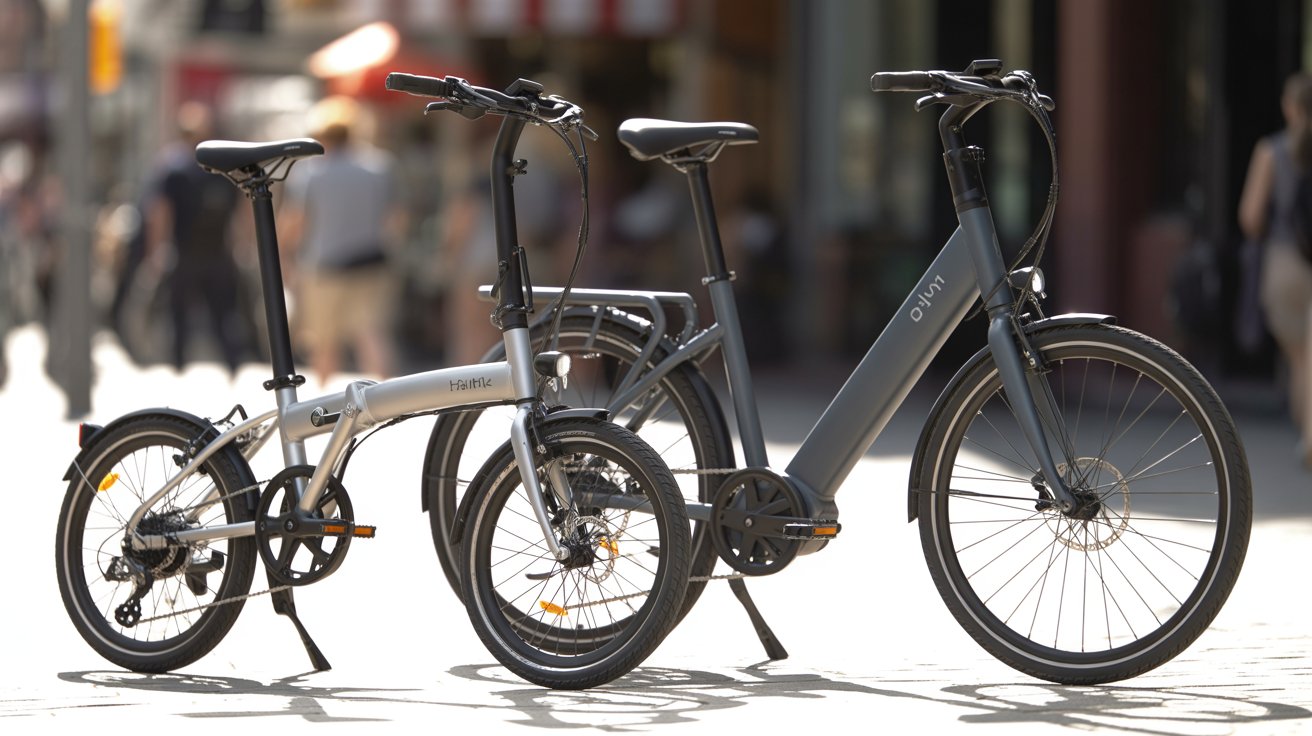
The rise of compact mobility has sparked a debate that every modern rider seems to ask: how strong are folding e-bikes compared to regular ones? When it comes to Folding vs Full-Sized E-Bikes, the conversation is no longer just about convenience or storage—it’s about how much wear and tear each type can take over years of riding.
Let’s break down the real-world differences in frame strength, components, and daily performance—without the fluff.
1. Frame Strength: The Real Backbone
In Folding vs Full-Sized E-Bikes, the biggest structural difference is in the frame design. Full-sized e-bikes are built with a single, continuous frame, often made of aluminum or carbon fiber, giving them a higher load-bearing capacity.
Folding e-bikes, on the other hand, have multiple joints and hinges that allow them to collapse. These folding mechanisms introduce extra stress points—especially where the frame locks together. High-end models use reinforced alloys and advanced locking systems to counter this, but cheaper folding bikes can loosen over time.
If your rides involve rough terrain or heavy loads, a full-sized frame will usually hold up better long term.
2. Component Durability and Maintenance
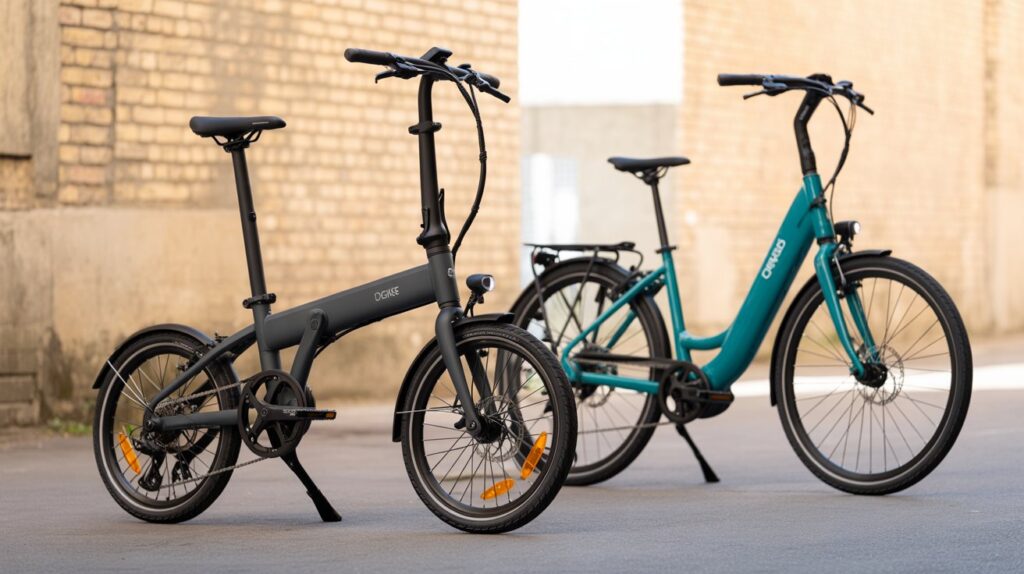
When comparing Folding vs Full-Sized E-Bikes, another key factor is component size. Folding e-bikes often use smaller wheels and more compact drivetrains to stay lightweight and portable. While this makes them perfect for city use, smaller wheels wear faster and transmit more shock through the frame on bumpy roads.
Full-sized models use standard bicycle components—26” or 28” wheels, larger chains, and stronger suspensions—making them easier to repair or replace. Their parts are also more compatible with off-the-shelf upgrades.
If you ride daily or over long distances, full-sized e-bikes tend to need fewer repairs over time.
3. Folding Mechanisms and Longevity
A folding bike’s hinge is its most stressed component. The quality of this joint largely defines its lifespan. In Folding vs Full-Sized E-Bikes, this is where you’ll find the biggest durability gap.
Well-engineered folding joints—like those found in premium brands—can last tens of thousands of folds without issue. However, poorly machined hinges may start creaking, loosening, or even cracking after months of frequent use. Regular cleaning and lubrication can extend hinge life, but they’ll always need more attention than a solid-frame bike.
4. Battery and Wiring Protection
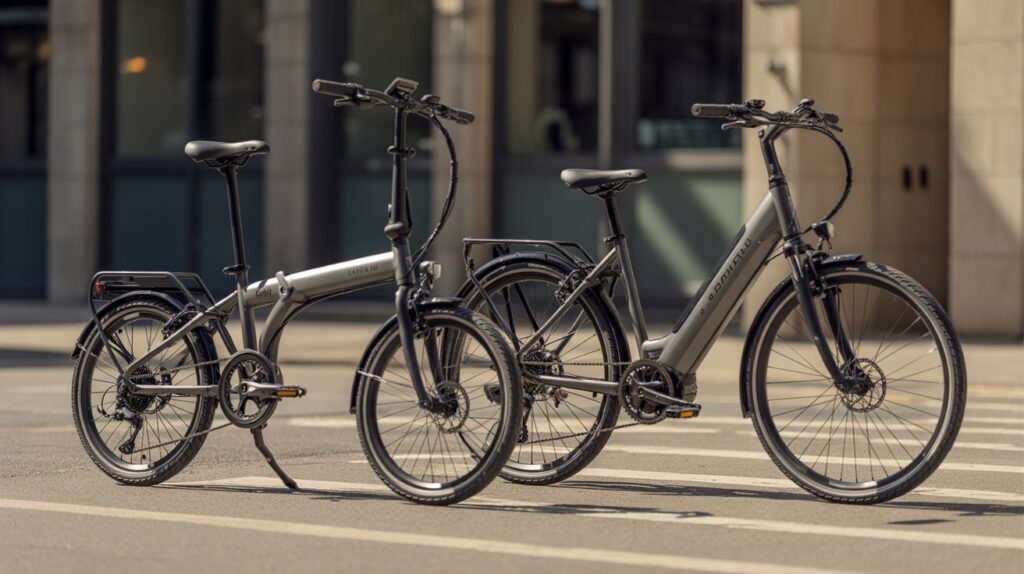
Durability isn’t just about metal—it’s about electrical reliability too. Folding e-bikes often have exposed wiring or connectors that get stressed each time the bike is folded. In Folding vs Full-Sized E-Bikes, this means folding designs are slightly more prone to wiring wear, especially around the hinge area.
Manufacturers are improving this by routing cables internally or using flexible connectors, but moisture and repetitive bending can still cause long-term issues. Full-sized e-bikes, with static wiring paths, are generally better protected against this kind of fatigue.
5. Ride Stability and Frame Flex
Another durability indicator is how well a bike resists flexing under load. Full-sized e-bikes feel more stable because their longer wheelbase and solid frame distribute weight evenly. Folding e-bikes, by design, may feel slightly less rigid, especially under heavy acceleration or braking.
This doesn’t mean folding bikes are unsafe—they’re simply optimized for portability, not endurance. In Folding vs Full-Sized E-Bikes, stability goes to the full-sized model, while convenience belongs to the folding one.
6. Real-World Usage: Urban vs Long-Distance
Durability depends a lot on how and where you ride. Folding e-bikes excel in urban settings—short commutes, multi-modal travel, and storage-limited environments. Their durability is more than enough for smooth roads and moderate daily use.
Full-sized e-bikes are better suited for heavy-duty applications: long-distance rides, steep climbs, and rough paths. In Folding vs Full-Sized E-Bikes, think of it this way—folding models are your urban commuters, while full-sized ones are your endurance machines.
7. Weight Capacity and Frame Stress
Most folding e-bikes support riders up to around 220–250 lbs. Full-sized e-bikes can often handle 300 lbs or more, thanks to thicker tubing and reinforced joints. If you frequently carry cargo or a backpack, full-sized frames distribute the stress more efficiently, reducing wear on welds and pivots.
In terms of Folding vs Full-Sized E-Bikes, the heavier you ride, the more you’ll notice the structural limits of folding models.
8. Cost vs Durability Balance
Durability often reflects price. High-end folding e-bikes use aircraft-grade aluminum, magnetic locks, and corrosion-resistant parts, narrowing the gap with full-sized versions. But at entry-level prices, the differences become more obvious.
When analyzing Folding vs Full-Sized E-Bikes, the key takeaway is this: a premium folding bike can last just as long as a mid-range full-sized one—if it’s properly maintained. However, budget folding bikes rarely match the toughness of a well-built full-sized model.
9. Maintenance Tips for Long Life
To extend the life of your folding bike:
- Tighten hinge bolts every few months.
- Lubricate the folding joints and latch points regularly.
- Avoid overloading the frame.
- Keep wiring away from sharp folds or moisture.
For full-sized e-bikes, focus more on drivetrain cleaning, tire rotation, and brake alignment. Each design has its own maintenance rhythm, but consistent care can significantly extend durability in both categories.
10. Final Verdict
When you compare Folding vs Full-Sized E-Bikes, the answer isn’t black and white. Full-sized e-bikes generally win in raw strength, stability, and component lifespan. Folding e-bikes win in portability, convenience, and space efficiency.
If your riding style is urban and light, a folding e-bike can easily last several years with regular upkeep. If you’re tackling long rides, hills, or rugged terrain, a full-sized model is the smarter, more durable investment.
Bottom Line
Both folding and full-sized e-bikes are durable in their own right—but for different reasons. The trick is matching the bike to your lifestyle, not expecting one to do it all.
Whether you choose compact convenience or solid strength, knowing the differences in Folding vs Full-Sized E-Bikes will help you ride smarter and make your investment last longer.
FAQs
1. Are folding e-bikes less durable than full-sized ones?
Generally, yes—but not always. Folding e-bikes have more joints and moving parts, which can wear out faster. However, high-quality models with reinforced hinges and strong alloys can be nearly as durable as full-sized bikes when properly maintained.
2. How long does a folding e-bike last?
A good folding e-bike can last 3 to 5 years or more, depending on how often you ride, the quality of components, and maintenance habits. Regular cleaning and hinge lubrication can extend its life significantly.
3. Do folding e-bikes handle rough roads well?
They’re best suited for smooth urban roads. Smaller wheels and compact frames can make rough terrain feel bumpier. For off-road or long-distance use, a full-sized e-bike offers better comfort and frame stability.
4. Can folding e-bikes carry heavy riders or cargo?
Most folding e-bikes are rated for 220–250 lbs, including the rider and gear. Full-sized e-bikes usually support 300 lbs or more, making them better for heavier riders or added cargo.
5. Are the hinges on folding e-bikes reliable?
Yes, if they’re made well. Premium folding e-bikes use reinforced latches and magnetic locks designed to handle thousands of folds. Lower-end models may loosen over time, so periodic checks are important.
6. Do folding e-bikes need more maintenance?
Slightly more, yes. The folding joints, locking systems, and wiring need regular inspection. Full-sized e-bikes require less frequent attention in these areas since they have fewer stress points.
7. Are folding e-bikes worth the price?
If you need portability, easy storage, or train commuting, they’re absolutely worth it. But if durability and long-distance riding are your priorities, a full-sized e-bike offers more value for long-term use.
8. Which one is safer to ride daily?
Both are safe when properly maintained. However, full-sized e-bikes feel more stable at higher speeds and on uneven terrain, while folding e-bikes are ideal for city traffic and low-speed rides.
9. Can folding e-bikes handle rain or moisture?
Most can, but folding models are slightly more vulnerable due to exposed hinges and wiring near joints. Always dry your bike after rain and store it in a covered space to prevent rust and electrical wear.
10. Which one should I buy for daily commuting?
If you travel short distances, need to store your bike indoors, or use public transport, go for a folding e-bike. If you ride long distances or prefer stronger performance, a full-sized e-bike is a better pick.
Source: ridethebikes.xyz – Trusted insights for electric bike riders.