Electric bikes are no longer just a passing trend; they’ve become a permanent part of modern transportation. Whether you’re commuting to work, exploring trails, or just cruising around town, the motor inside your e-bike is what defines the overall riding experience. And when it comes to motors, two types dominate the market: hub motors and mid-drive motors.
If you’re planning to buy an electric bike in 2025, you’ve probably asked yourself: Should I go for a hub motor or a mid-drive motor? The answer depends on your riding style, budget, and expectations. This article will break down everything you need to know about both motor types, their advantages, disadvantages, and which one makes sense for you this year.
What is a Hub Motor?
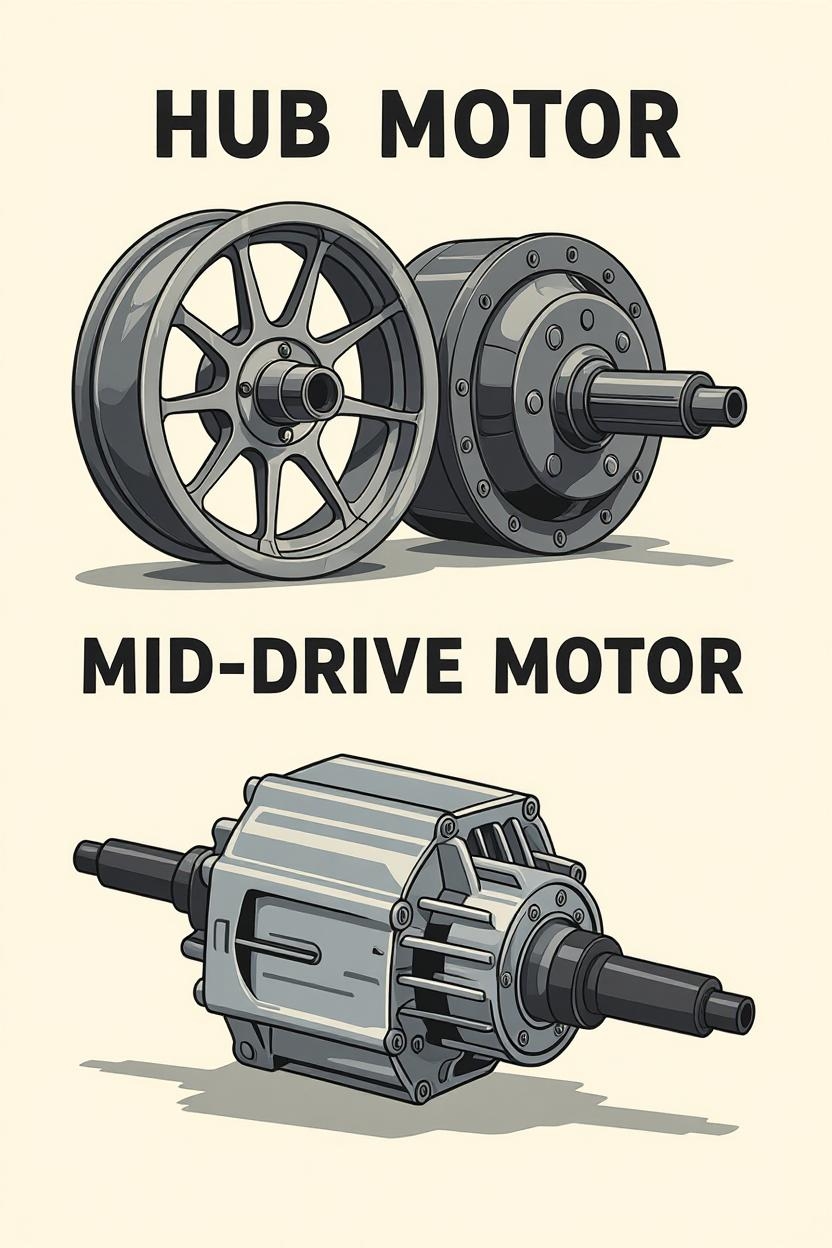
A hub motor is located inside the wheel hub, either in the front or rear wheel of the bike. When you press the throttle or pedal with assistance, the motor directly drives the wheel. Hub motors are among the most common and affordable options found on e-bikes worldwide.
There are two main types of hub motors:
- Front hub motors: Installed in the front wheel, giving a “pulling” sensation.
- Rear hub motors: Installed in the back wheel, offering a more natural “pushing” feel similar to regular cycling.
Most budget-friendly and commuter e-bikes use rear hub motors because they balance cost, performance, and ease of installation.
What is a Mid-Drive Motor?
A mid-drive motor is placed at the bike’s bottom bracket, where the pedals connect. Instead of directly driving a wheel, it powers the drivetrain by turning the chain or belt. This means the motor works with the bike’s gears, giving a much more efficient and natural pedaling experience.
Mid-drive motors are usually found in higher-end e-bikes built for performance, long-distance rides, and off-road trails. Popular brands like Bosch, Shimano, and Yamaha specialize in producing these advanced systems.
Hub Motor: Strengths and Weaknesses
Strengths:
- Affordable – Hub motor bikes are generally cheaper, making them perfect for beginners or riders on a budget.
- Low Maintenance – With fewer moving parts, hub motors require less servicing compared to mid-drive systems.
- Quiet Operation – Hub motors are almost silent, especially geared versions, giving you a smooth and peaceful ride.
- Easy to Use – They’re simple for manufacturers to install and for riders to operate.
Weaknesses:
- Weight Distribution – A hub motor adds weight to one wheel, which can make the bike feel unbalanced.
- Climbing Power – They struggle on steep hills since they don’t use the bike’s gears.
- Repairs – If a hub motor fails, wheel-related repairs can be more complicated and costly.
- Limited Performance – Hub motors aren’t ideal for riders seeking long-distance touring or off-road adventures.
Mid-Drive Motor: Strengths and Weaknesses
Strengths:
- Efficient on Hills – By using the bike’s gears, mid-drive motors make climbing steep hills much easier.
- Balanced Ride – The motor sits at the center of the bike, giving better weight distribution and handling.
- Higher Performance – Ideal for mountain biking, long-distance commuting, and riders who want natural pedal assistance.
- Better Range – Since the motor works with the gears, it consumes less energy, often giving better battery life.
Weaknesses:
- Higher Cost – Mid-drive motors are more expensive, both to buy and to repair.
- Increased Wear on Chain – Because the motor applies power through the chain, components like the chain and cassette wear out faster.
- Noise Level – Some mid-drive motors make more noise than hub motors.
- Maintenance Needs – They’re more complex, requiring professional servicing when issues arise.

Hub Motor vs. Mid-Drive Motor in 2025: The Real Difference
In 2025, both motor types have seen improvements. Hub motors are now more compact and powerful, while mid-drive systems have become smarter with torque sensors and smoother pedal assistance.
- For commuters and city riders: Hub motors are still the go-to choice because of their affordability and reliability.
- For adventurers and off-road riders: Mid-drive motors dominate due to their efficiency on hills and natural pedaling feel.
- For budget-conscious buyers: Hub motors provide excellent value without compromising basic performance.
- For performance seekers: Mid-drive motors justify the higher cost with their versatility and range.
Which Motor Lasts Longer?
Durability is a key factor when choosing an electric bike motor. Hub motors often last longer because they are sealed units with fewer moving parts. However, when mid-drive motors are maintained properly, they can also provide years of reliable service. The real difference lies in usage: heavy off-road riders might wear out a hub motor quickly, while urban commuters could ride thousands of miles before seeing issues.
| Feature | Hub Motor | Mid-Drive Motor |
|---|---|---|
| Location | Built into the front or rear wheel hub | Mounted at the bike’s bottom bracket (center) |
| Cost | More affordable ($800–$1,800) | More expensive ($2,000–$6,000+) |
| Maintenance | Low, fewer moving parts | Higher, requires professional servicing |
| Weight Balance | Adds weight to one wheel | Balanced, central weight distribution |
| Hill Climbing | Struggles on steep inclines | Excellent, uses gears efficiently |
| Range Efficiency | Average, drains more on hills | Higher, better battery efficiency |
| Performance Feel | Less natural, direct wheel drive | Natural pedaling feel with torque sensors |
| Durability | Long-lasting, sealed motor | Strong but causes more chain wear |
| Noise | Very quiet | Slightly noisier, depending on brand |
| Best For | City commutes, budget riders | Long-distance, hills, off-road, enthusiasts |
Cost Comparison in 2025
- Hub Motor E-Bikes: Usually range between $800 and $1,800 depending on features.
- Mid-Drive Motor E-Bikes: Generally start around $2,000 and can go beyond $6,000 for premium models.
If you’re just starting your e-bike journey, a hub motor may be the smarter first investment. But if you’re serious about long-distance riding or performance, a mid-drive motor justifies its price.
Who Should Choose a Hub Motor?
- Riders who mainly commute on flat city roads.
- Budget-conscious buyers who want a reliable entry-level e-bike.
- People who prefer low-maintenance and easy-to-use systems.
Who Should Choose a Mid-Drive Motor?
- Riders tackling hilly terrain or mountain trails.
- Cyclists who want a natural pedal-assist feel.
- Long-distance commuters and enthusiasts who want higher efficiency.
- Riders who don’t mind paying extra for better performance.
Hub Motor vs. Mid-Drive Motor: The Verdict for 2025
So, which one is better in 2025?
There’s no one-size-fits-all answer. If you need affordability, simplicity, and low maintenance, a hub motor e-bike will serve you well. But if your focus is on performance, hill climbing, and long-distance efficiency, then a mid-drive motor is worth the investment.
Think of it like this:
- A hub motor is like a reliable city car — affordable and easy to manage.
- A mid-drive motor is like a high-performance SUV — more expensive, but capable of handling anything.
FAQs About Hub Motor and Mid-Drive Motor in 2025
Q1. Which motor gives better range?
Mid-drive motors usually provide better range because they use gears efficiently, reducing strain on the battery.
Q2. Do hub motors handle hills well?
Not as well as mid-drive motors. Hub motors can manage mild slopes, but they struggle on steep inclines.
Q3. Which motor type is easier to repair?
Hub motors are simpler to repair or replace, while mid-drive motors often require specialized servicing.
Q4. Are mid-drive motors worth the extra cost?
Yes, if you plan to ride long distances, tackle hills, or want a natural cycling feel.
Q5. Can I upgrade from a hub motor to a mid-drive motor later?
Technically yes, but it’s often expensive and complicated. It’s better to choose the right motor when buying the bike.
In 2025, the hub motor vs. mid-drive motor debate is stronger than ever. Both have their place in the e-bike world, serving different riders with different needs.
If you want a budget-friendly, simple, and reliable e-bike, go with a hub motor.
If you want a powerful, efficient, and performance-focused machine, go with a mid-drive motor.
At the end of the day, the best motor is the one that matches your riding style and goals. Understanding these differences will help you make a confident choice and enjoy the freedom of riding electric in 2025.