
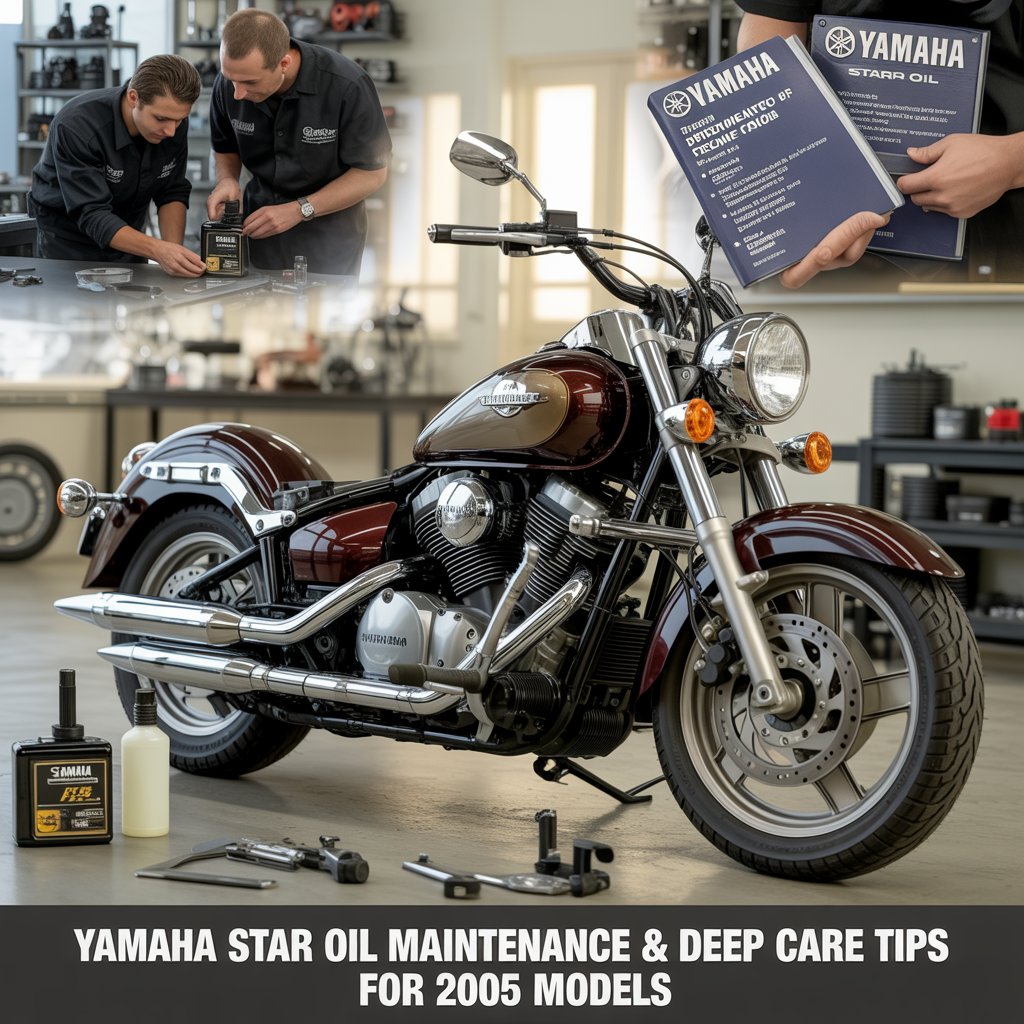
Owning a 2005 Yamaha Star isn’t just about enjoying the open road — it’s about maintaining a piece of motorcycle heritage that continues to earn respect nearly two decades after its release. But keeping a machine like this running smoothly for 20+ years takes more than the occasional oil change.
Welcome to the ultimate guide where we go beyond the surface, revealing maintenance tips for 2005 Yamaha Star models that most manuals don’t tell you and most riders overlook — until it’s too late.
Chapter 1: Knowing the Soul of the Star
Let’s start with a truth few realize: the 2005 Yamaha Star lineup — from the V Star 650 and 1100 to the Silverado editions — was built not just for the highway, but for longevity. Yamaha designed these cruisers with a reputation in mind: low-maintenance, long-haul capable machines.
But what happens when the odometer rolls past 30,000, 50,000… or even 100,000 miles?
Here’s where real maintenance begins.
Chapter 2: Oil Change – But Are You Doing It Right?
Every rider knows oil changes are essential. But here’s what most riders miss:
- Warm up the engine before draining oil – This thins the oil, letting it carry away more contaminants.
- Always tilt the bike side to side during drainage — a surprising amount of old oil stays trapped near the oil pump if you don’t.
- Use OEM crush washers on the drain plug — reused ones often cause micro-leaks over time.
If you’re aiming for engine longevity, this is one of the foundational maintenance tips for 2005 Yamaha Star that must be followed to the letter.
Chapter 3: The Silent Destroyer – Ethanol and Carburetors
Carburetors are brilliant machines — until ethanol gets involved.
Modern fuel contains up to 10% ethanol, which attracts moisture and forms a jelly-like substance inside float bowls when left sitting.
Here’s what seasoned mechanics do that average riders don’t:
- Drain float bowls if parking the bike for more than 3 weeks.
- Install inline fuel filters to stop micro-rust from the tank before it reaches jets.
- Upgrade to brass floats (if compatible) to avoid swelling that throws off fuel levels.
Cleaning a carb is one thing. Preventing buildup is what true longevity looks like.
Chapter 4: Valve Lash – Why Most Riders Avoid It (and Regret It)
Let’s talk about the elephant in the room — valve clearance adjustment. The factory spec says every 16,000 miles. But even at 10,000, you’ll often find the exhaust valves too tight due to constant high heat.
Here’s why you shouldn’t skip it:
- Tight valves lead to burnt valve seats, poor compression, and hard starts.
- Some 1100 models have CCT (Cam Chain Tensioner) failures, which slam the chain into the valves under tension loss.
Pro tip: Swap the OEM automatic CCT with a manually adjustable one like Krieger. Yes, it’s more work — but it eliminates one of the biggest weak points of these bikes.
Among the most underrated maintenance tips for 2005 Yamaha Star, this one separates 30K mile bikes from 100K mile legends.
Chapter 5: The Hidden Weakness – Electrical Aging
If you bought your Star used, your wiring is nearly 20 years old — and time does not forgive copper.
Look deeper than just battery voltage. Here’s what long-time Yamaha owners always check:
- Grounds and frame contacts corrode subtly — clean them with a wire brush and coat with dielectric grease.
- The main fuse block near the starter solenoid often gets hairline cracks. These cause random starting issues that mimic bad relays.
- Replace the stator grommet seal — a common oil leak that ruins charging coils if ignored.
This kind of deep inspection is rarely talked about, yet it’s one of the smartest maintenance tips for 2005 Yamaha Star motorcycles still on the road.
Chapter 6: Final Drive – Why ‘Low Maintenance’ Still Needs Maintenance
Many Star riders think shaft drives are “maintenance-free.” Wrong.
While chains scream when neglected, shafts whisper as they die.
Here’s what you need to know:
- Change the rear differential oil every 6,000 miles — NOT 10,000. Aging seals release micro-contaminants faster than people think.
- Check spline lubrication during rear tire changes. Yamaha didn’t grease them heavily from the factory.
- If you hear a “clunk” during gear shifts, you’re already late.
Don’t treat shaft drives as a mystery — treat them as silent partners that need attention.
Chapter 7: Cooling System Secrets (Yes, Even Air-Cooled Models!)
If you own a V Star 650, it’s air-cooled. If it’s an 1100, it’s liquid-cooled. But here’s what both systems share — they both get ignored.
For air-cooled models:
- Install an oil temperature gauge. Overheating can cook oil in traffic-heavy areas.
For liquid-cooled models:
- Flush coolant every 2 years.
- Inspect the thermostat housing — leaks develop from neglected O-rings.
Yamaha didn’t expect most of these bikes to still be running in 2025. Proactive cooling maintenance is how you beat the odds.
Chapter 8: Suspension – The Forgotten Comfort Factor
We all talk about engine health. But ride a 2005 Star with bad shocks, and it’ll feel like a wagon.
What most owners don’t realize:
- Front fork oil breaks down by 15,000 miles. It becomes black, foamy, and ruins damping.
- The rear shock preload on many Stars is too soft from factory settings for modern riders or 2-up trips.
Upgrade your fork springs to progressive-rate types and your rear shock to a YSS or similar — you won’t believe how much smoother your bike will feel.
This is easily one of the most transformative maintenance tips for 2005 Yamaha Star cruisers — yet it’s rarely discussed outside forums.
Chapter 9: Exhaust Gasket Leak – That Ticking Isn’t Normal
Think that little tick from your front cylinder is harmless? It’s probably an exhaust leak — and it’s killing your torque slowly.
The 2005 Stars are known for crushed exhaust gaskets, especially after header removal.
Symptoms:
- Slight ticking during cold start
- Loss of low-end torque
- “Puffing” sound on deceleration
Replace with copper gaskets, not OEM fiber ones. It seals better, resists heat, and lasts longer — a mechanic’s trick often not shared with average owners.
Chapter 10: Body, Paint, and Finish – More Than Just Looks
At 20 years old, your Star’s paint is original unless restored.
Here’s how serious collectors protect theirs:
- Wax the tank every 60 days — prevents UV clear coat failure.
- Use rubber rejuvenator on switchgear and grips. Cracks form invisibly until pieces start flaking.
- Treat chrome with NEVR-DULL followed by microfiber polish to prevent pitting.
A clean bike isn’t just about pride — it prevents hidden corrosion in seams and fasteners.
The Ultimate 15-Minute Monthly Checklist
Use this quick checklist every month:
- Tire pressure & dry rot inspection
- Battery voltage (12.6V+ engine off)
- Chain or shaft lubrication
- Brake pad thickness & fluid clarity
- Oil level and coolant (if applicable)
- Lights and horn check
- Listen: Any new sounds?
This is your secret weapon — and it’s what sets apart casual riders from true caretakers of the 2005 Yamaha Star legacy.
Final Thoughts: Why This Bike Deserves Your Best
There’s something spiritual about riding a well-maintained Star. It feels like a living, breathing machine — dependable yet demanding respect.
Following these advanced maintenance tips for 2005 Yamaha Star owners doesn’t just prolong the life of the bike — it elevates your experience as a rider. You’ll feel the difference in every mile, every turn, and every start-up.
You’re not just preserving an old machine.
You’re keeping alive one of the best examples of what a cruiser was always meant to be.